If you speak to almost any crew agent, you'll hear a similar story.
The phone rings. "I want a job on a yacht."
A CV arrives in the inbox.
An email arrives. “Can you help me get into the industry?”
A CV lands in the inbox.
And the process starts again – explaining how yachts operate, what departments do, what’s realistically expected onboard, and which courses actually matter. It’s necessary work. But it takes time, and much of it happens before a candidate is anywhere near being ready for placement. That’s why more crew agents are beginning to use the Progressive Crew Career Programme (PCCP) as a screening step.
The Challenge Agents Face
Most new candidates arrive enthusiastic but under-prepared. They may have completed mandatory certificates, but many still lack a clear understanding of:
How a yacht operates day to day
What life onboard is actually like
What professional standards really mean in practice
This creates a bottleneck at the very start of recruitment. Agents spend hours explaining fundamentals before they can begin assessing whether someone is a good fit.
PCCP helps close that gap.
A Different Starting Point
PCCP is a foundational crew-readiness programme designed to give candidates a realistic, operational understanding of the industry before they move forward into the hiring process. Instead of arriving with only certificates, candidates who complete PCCP already have:
A clear picture of onboard roles and expectations
Insight into how departments connect
A broader understanding of yacht operations
For agents, this changes the conversation. Instead of starting at square one, discussions begin at a more informed level. Candidates ask much better questions, show clearer direction, and present more realistically.
A Filter That Works Naturally
Many agencies now encourage prospective candidates to complete PCCP before progressing further.
This tends to produce a natural filtering effect.
Some candidates decide the industry may not be right for them. Some realise they need to refine their direction. And those who continue usually do so with a much stronger understanding of what they're stepping into.
The result is fewer unsuitable applications and a more focused recruitment process.
Why PCCP Focuses on Knowledge, Not Certificates
One of the reasons PCCP has gained acceptance among agents is its clear positioning.
It does not replace mandatory training. Compliance courses exist to meet regulatory and safety requirements, and they remain essential. But compliance training serves a specific purpose: it gives you permission to work. What it doesn’t always provide is a complete understanding of how a yacht functions as a working environment. PCCP focuses on that understanding.
It looks at:
How vessels operate as integrated systems
Why procedures exist – not just how to follow them
How departments influence each other
How experienced crew think and prioritise
Or, put simply:
Compliance training keeps you compliant.
PCCP helps make you valuable.
Better Prepared Candidates, Smoother Placements
Agents who use PCCP as part of their onboarding process often notice the difference quickly.
Candidates who have completed the programme tend to:
Have more realistic expectations
Communicate more professionally
Understand hierarchy and onboard structure
Integrate more smoothly once placed
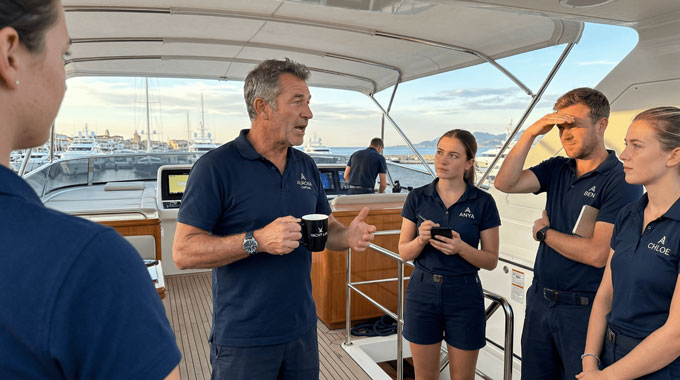
For captains and senior crew, that preparation can make onboarding easier and reduce early-stage friction.
A Shift in How the Industry Screens Crew
Yachting doesn’t change overnight. Most improvements happen gradually – through better practices, better training, and better systems. The growing use of PCCP suggests the industry may be moving toward a more practical approach to recruitment: screening for understanding, not just certificates.
For crew agents, it means less time explaining basics. For captains, it means better prepared candidates. And for new crew, it means stepping onboard with confidence instead of uncertainty.
A small change — but one that's starting to make a noticeable difference.