Progressive Crew Career Programme logo

Yacht Engineering Basics

Marine Engineering Course 1
Only $140
Once-off Payment

Your First Step Into Marine Engineering Fundamentals.

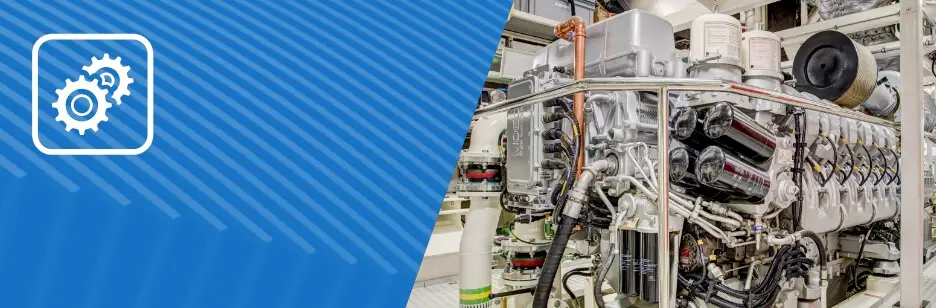
Marine Engineering Course 1 builds the core knowledge every future yacht or marine engineer needs. In ten focused modules, you’ll explore yacht engineering basics, engine cycles, and key onboard systems — including fuel, air, cooling, lubrication, electrical systems, power transmission, and hull fittings. Ideal for new engineers or crew building technical understanding, this course gives you the foundation to understand how marine powerplants operate safely and efficiently.

Online Marine Engineering Basics Course for Future Yacht Crew Marine Engineering Course 1

1 Year of access

$ 140

Once-off Payment

Buy Now
Reference materials for yacht industry training Reference Material

Reference Material: This library contains all essential resources and documents to support your studies, including:

  • Comprehensive Glossary of Nautical Terminology
  • Maritime Industry Acronyms
See bonus material
Materials Provided
Module 1 - Compression Ignition Engine see more

This module introduces the fundamental principles of both compression ignition (diesel) and spark ignition (petrol) engines. Learners will gain an understanding of their construction, operation, and key differences in combustion processes.

  • Lesson 1:
    General Principles of Compression and Spark Ignition Engines
  • Module Test
Module 2 - Engine Operating Cycles and Construction Details see more

This module explains the operating cycles of diesel engines and explores their key constructional features. Learners will study the four-stroke and two-stroke cycles, identify main engine components, and understand how each part contributes to the efficient operation of a marine diesel engine.

  • Lesson 1:
    Engine cycles explained - Two and four strokes
  • Lesson 2:
    The essential engine components
  • Lesson 3:
    The meaning of engine terms
  • Lesson 4:
    Engine configurations
  • Lesson 5:
    Engine performance data
  • Module Test
Module 3 - The Fuel System see more

This module provides a comprehensive understanding of the marine diesel fuel system and its safe operation. Learners will study system layout, fuel treatment, and delivery processes, applying correct procedures and identifying potential risks to ensure safety and efficiency.

  • Lesson 1:
    The Nature of Diesel Engine Fuels
  • Lesson 2:
    The Fuel Tank
  • Lesson 3:
    Fuel Separator and Fuel Pre-Filter
  • Lesson 4:
    Fine Paper Element Filters
  • Lesson 5:
    Fuel Lift Pumps
  • Lesson 6:
    Fuel Injection Pumps
  • Lesson 7:
    Common Rail System
  • Lesson 8:
    Fuel Injectors
  • Lesson 9:
    Fuel System Safety
  • Lesson 10:
    Fuel Reserve
  • Lesson 11:
    Bleeding the Fuel System
  • Module Test
Module 4 - The Role of Air in the Combustion Process see more

This module explores the function and importance of air in the combustion process. Learners will examine air intake and exhaust systems, turbocharging, and the relationship between air supply and efficient fuel combustion, reinforcing theoretical knowledge with practical examples.

  • Lesson 1:
    The Concepts of Fuel as an Energy Source
  • Lesson 2:
    Air Filters and Inlet Manifold
  • Lesson 3:
    Naturally Aspirated and Turbo Charged Engines
  • Lesson 4:
    The Operating Principles of Turbochargers
  • Lesson 5:
    Charge Air Coolers
  • Lesson 6:
    The Exhaust System
  • Module Test
Module 5 - The Cooling System see more

This module develops knowledge of the design, operation, and maintenance of marine engine cooling systems. Learners will study seawater and freshwater circuits, pumping components, and safe operating practices that prevent overheating and maintain engine reliability.

  • Lesson 1:
    Combustion Process Temperatures
  • Lesson 2:
    The Engine's Cooling Circuits
  • Lesson 3:
    Raw Water Cooling System
  • Lesson 4:
    Freshwater Cooling System
  • Lesson 5:
    Correct Cooling Water Temperature
  • Lesson 6:
    Cooling Water Pumps
  • Module Test
Module 6 - The Lubrication System see more

This module covers the purpose and operation of lubrication systems in marine diesel engines. Learners will understand oil circulation, filtration, and cooling, and develop the competence to maintain the system and its components to prevent wear, contamination, and failure.

  • Lesson 1:
    The Role of Lubricating Oil
  • Lesson 2:
    Lubricating Oil Flow
  • Lesson 3:
    Lubricating Oil Pumps
  • Lesson 4:
    Lubricating Oil Filters
  • Module Test
Module 7 - Engine Electrical Systems see more

This module introduces the principles and components of marine electrical systems associated with engine operation. Learners will gain an understanding of batteries, alternators, starters, and basic electrical distribution, including safe maintenance and troubleshooting practices.

  • Lesson 1:
    Types of Batteries
  • Lesson 2:
    The Rating of Batteries
  • Lesson 3:
    Battery Discharge and Recharge Relationship
  • Lesson 4:
    Twin Battery Installations
  • Lesson 5:
    The A.C. Generator
  • Lesson 6:
    Pre-Engaged Starter Motors
  • Lesson 7:
    Engine Stopping Arrangements
  • Lesson 8:
    Cold-Starting Aids
  • Lesson 9:
    Basic Circuit Diagrams
  • Lesson 10:
    Safety Features
  • Module Test
Module 8 - Power Transmission see more

This module develops knowledge of marine power transmission systems, including gearboxes, couplings, stern tubes, and propellers. Learners will understand how engine power is transferred to propulsion, and how to operate and maintain these systems safely and efficiently.

  • Lesson 1:
    Gearboxes and Clutches
  • Lesson 2:
    Bowden Cables and Rods
  • Lesson 3:
    Propeller Shafting and Couplings
  • Lesson 4:
    Stern Tube Bearings and Sealing Arrangements
  • Lesson 5:
    Basics of Propeller Matching
  • Module Test
Module 9 - Hull Fittings see more

This module provides an understanding of key hull fittings found on marine vessels. Learners will explore the function and maintenance of seacocks, through-hull valves, and cathodic protection systems, emphasizing safe operation and corrosion prevention.

  • Lesson 1:
    The Maintenance and Inspection of Seacocks
  • Lesson 2:
    Cathodic Protection Systems, Sacrificial Anodes, and Bonding
  • Module Test
Module 10 - Legislation and Safety see more

This module outlines essential legislative and safety requirements for engineers at sea. Learners will study safe working practices, risk assessment, confined-space entry, and fire prevention, as well as environmental compliance through MARPOL and the UK Clean Maritime Plan, promoting sustainable and responsible vessel operation.

  • Lesson 1:
    The Code of Safe Working Practices
  • Lesson 2:
    Fire Extinguishing Systems
  • Lesson 3:
    Bottled LPG Installations
  • Lesson 4:
    Marine Pollution and MARPOL
  • Lesson 5:
    The Clean Maritime Plan and the Future of Green Shipping
  • Module Test
Marine Engineering Course 1-Examination see more

The score for this course contributes towards an average final score after completing all the courses.

Reference materials for yacht industry training Reference Material

Reference Material: This library contains all essential resources and documents to support your studies, including:

  • Comprehensive Glossary of Nautical Terminology
  • Maritime Industry Acronyms
Who This Marine Engineering Course Is For:
  • You want to explore engine room fundamentals before committing to costly training or career decisions.
  • You’re considering a yachting career and want real insight into yacht engine systems before investing further.
  • You’re new to yachting and want to build practical technical awareness before stepping onboard for the first time.
  • You’re a career changer looking for structured, trustworthy training
  • You’re currently working onboard and want to upskill without disrupting your schedule
  • You’re a senior crew member who wants to train junior team members efficiently with minimal time spent away from duties
  • You want to avoid wasting time and money on unnecessary courses by understanding marine engineering basics first.
What You Get:
  • Professionally structured online course developed by industry experts
  • Quick-reference guides
  • Real-world examples and visual demonstrations throughout
  • Interactive learning experience with scenario-based content
  • 12 months of unlimited access — learn anytime, anywhere
  • Certificate of completion
  • A practical onboard training tool for individual upskilling or team development

Know Your Industry Options – Learn More

If you are not sure about starting a long-term career in the Luxury Yacht Industry access the world’s most comprehensive and succinct career guidance tool here, and find out what to do, when to do it, and where to do it, at your own pace.

Watch the Overview Video below or visit the
Academy by Ephemeris Website

How a Fleet Captain Uses PCCP to Raise Onboard Training Standards

Still Not Sure Where to Start?

We recommend starting with the Introduction to Yachting Course.

This course gives you a clear understanding of how the industry operates, what each department does, and which career pathways may suit you before progressing further.

Introduction to Yachting online course for future yacht crew
$117
Introduction to Yachting

Know Your Industry Options – Learn More

If you are not sure about starting a long-term career in the Luxury Yacht Industry access the world’s most comprehensive and succinct career guidance tool here, and find out what to do, when to do it, and where to do it, at your own pace.

Watch the Overview Video below or visit the
Academy by Ephemeris Website

How a Fleet Captain Uses PCCP to Raise Onboard Training Standards

Still Not Sure Where to Start?

We recommend starting with the Introduction to Yachting Course.

This course gives you a clear understanding of how the industry operates, what each department does, and which career pathways may suit you before progressing further.

Introduction to Yachting online course for future yacht crew
$117
Introduction to Yachting

Supported and endorsed by:

Human Rights at Sea logo

Promotes global advocacy protecting seafarers’ rights and dignity.

HRASI logo

A human rights consultancy specialising in the maritime environment globally
Protecting Crew Lives logo

Protecting Crew Lives is an independent, advocacy-led, informational community